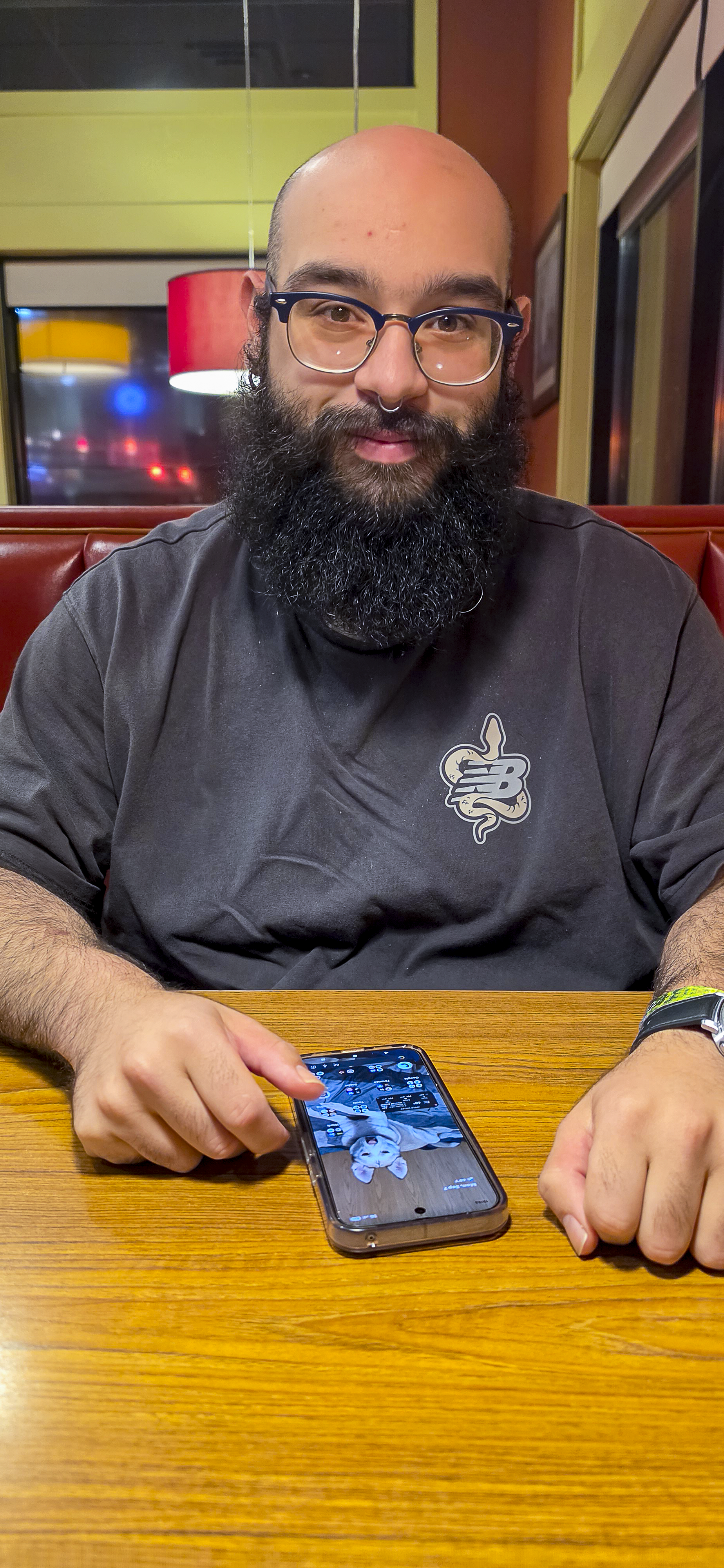
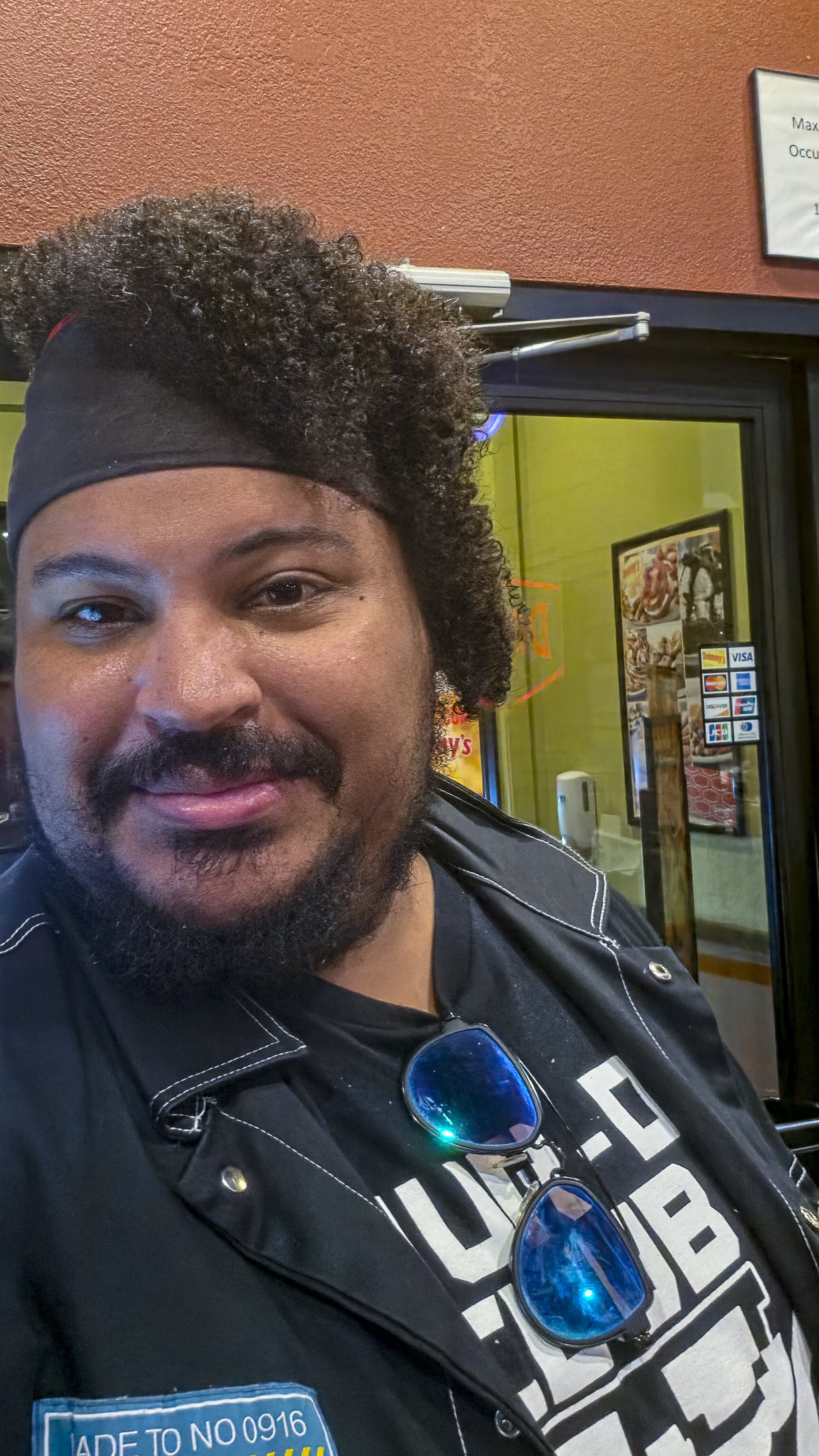
Shangri-La may have been familiar territory for Nur-D, but it was completely new territory for Skull Dogs.
The 2026 festival marked our third time filming Nur-D, following Taste of Minnesota and his rooftop performance at the Hewing Hotel. By this point, working together was starting to feel familiar. But, you never really know where the next gig is going to take you.
This time, it took us to Harmony Park.
And directly into a festival walkway.
Welcome to Shangri-La
Jose and I arrived well ahead of Nur-D, which gave us plenty of time to figure out our first major challenge of the day: where we were supposed to park.
Directions inside the festival grounds were somewhat interpretive.
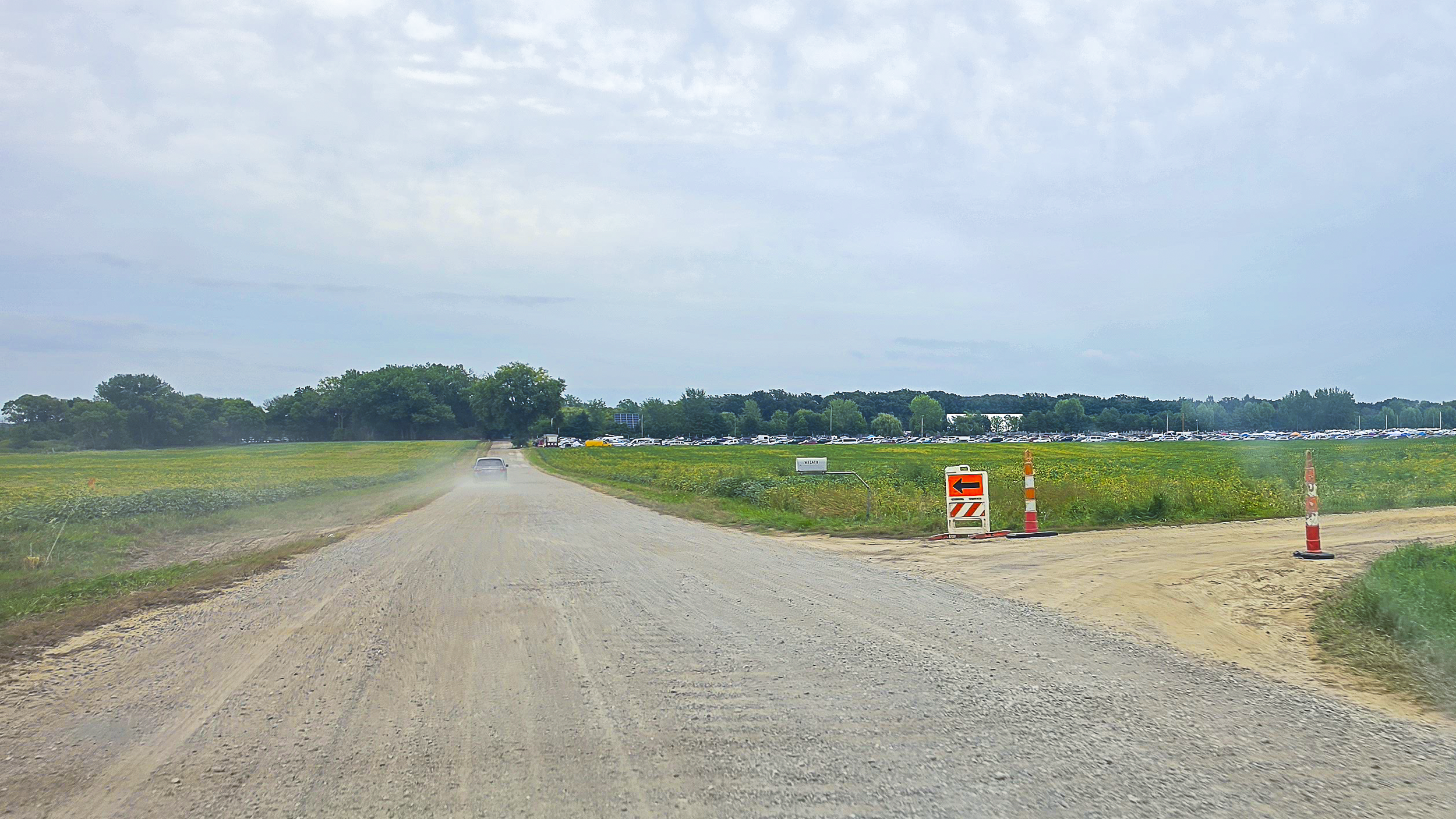
At one point, while attempting to follow the route we had been given for performers and crew, Jose managed to drive us down what appeared to be a perfectly reasonable road until it gradually became apparent that this was, in fact, an area intended for pedestrians and vendors.
Fortunately, the vendors were incredibly kind. A few of them helped us back our way out and track down security so we could be guided to somewhere more appropriate for a vehicle.
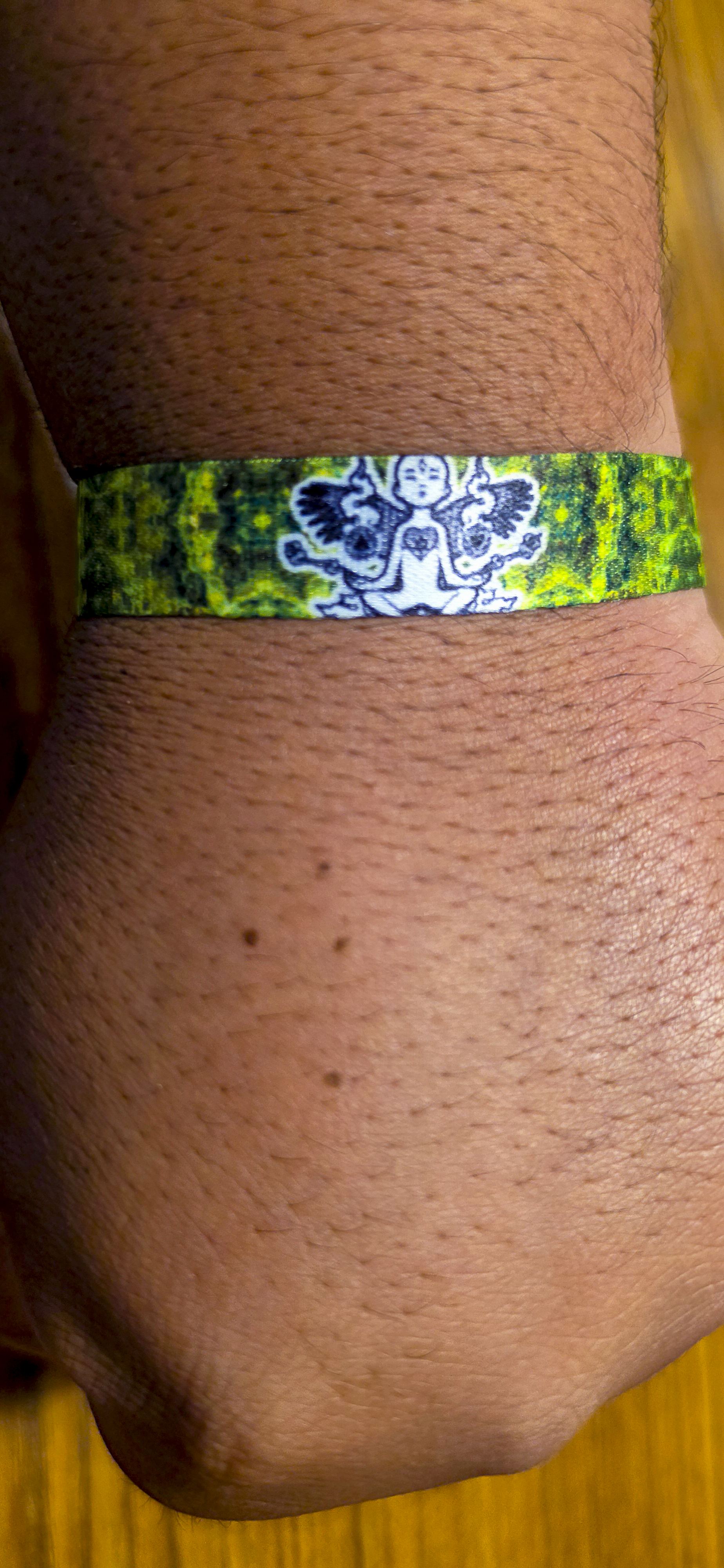
They left us with some small marble acorn charms as a memento.
JP (aka “Papa Josh), Nur-D’s Production Manager, arrived shortly after we finally parked, and we spent much of the next stretch hanging around with him as members of the Friendly Neighborhood Spider-Band gradually filtered into the festival, with Nur-D himself being the last to arrive.
With the Nur-D and the band finally gathered together, I took the opportunity to share with them the official poster for the Hell Album Artwork. Watching the members of the band explore the piece and find themselves in the illustration was truly a highlight of the evening. At the time, the album was still more than a month away, and the cover hadn’t been revealed publicly yet, so it was one of the first opportunities I had to see the people represented in the artwork actually reacting to it for the first time.
Which was especially thrilling with the reveal that Nur-D had adjusted the plan for the Spider-Band’s performance uniforms for Hell to be inspired by the art I’d made, rather than the original all-red jumpsuit plan.
After that, we went to find the stage.
About That “Main Stage”
This was where things became interesting.
We knew Nur-D was performing in Shangri-La’s main stage area. What none of us had quite understood was that the festival’s main area contained multiple performance stages.
One of them was enormous.
The other was the Field Stage.
Nur-D was on the Field Stage.
The difference was difficult to miss.
The setup allows one stage to run while the next prepares, with the audience shifting across the field between performances. It makes sense as festival logistics. It was considerably more surprising when we saw the amount of space available for Nur-D and the Friendly Neighborhood Spider-Band.
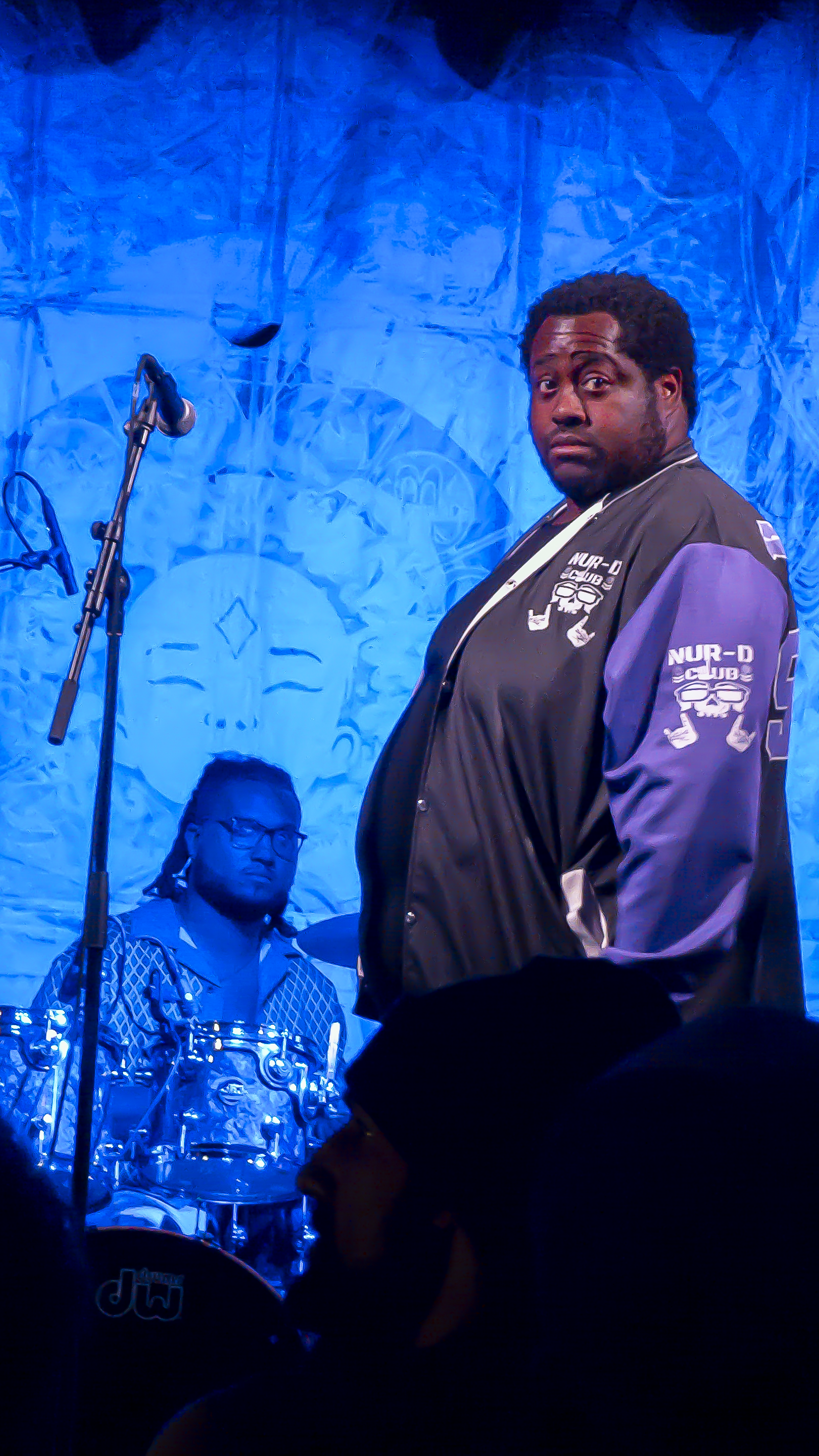
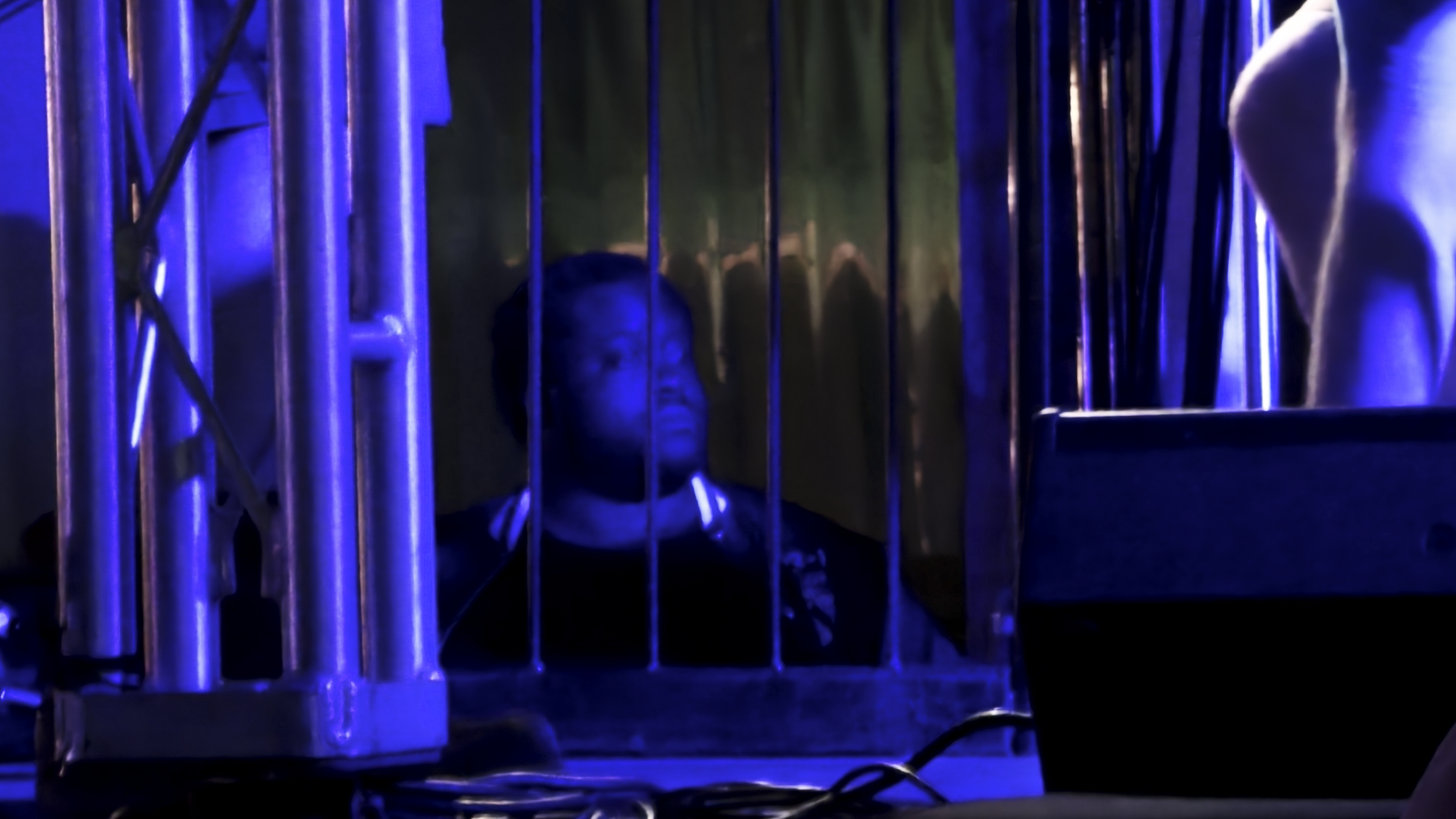
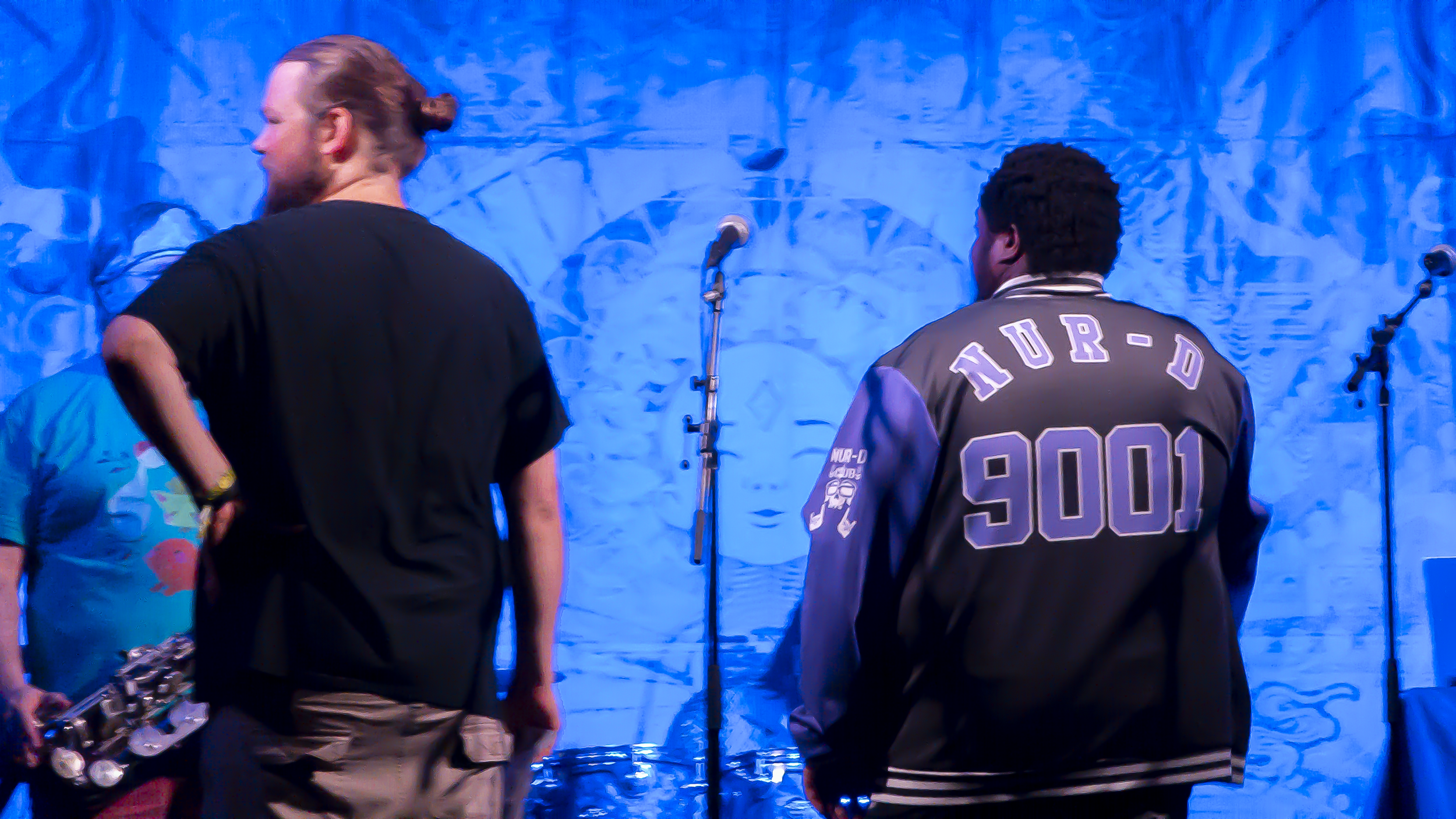
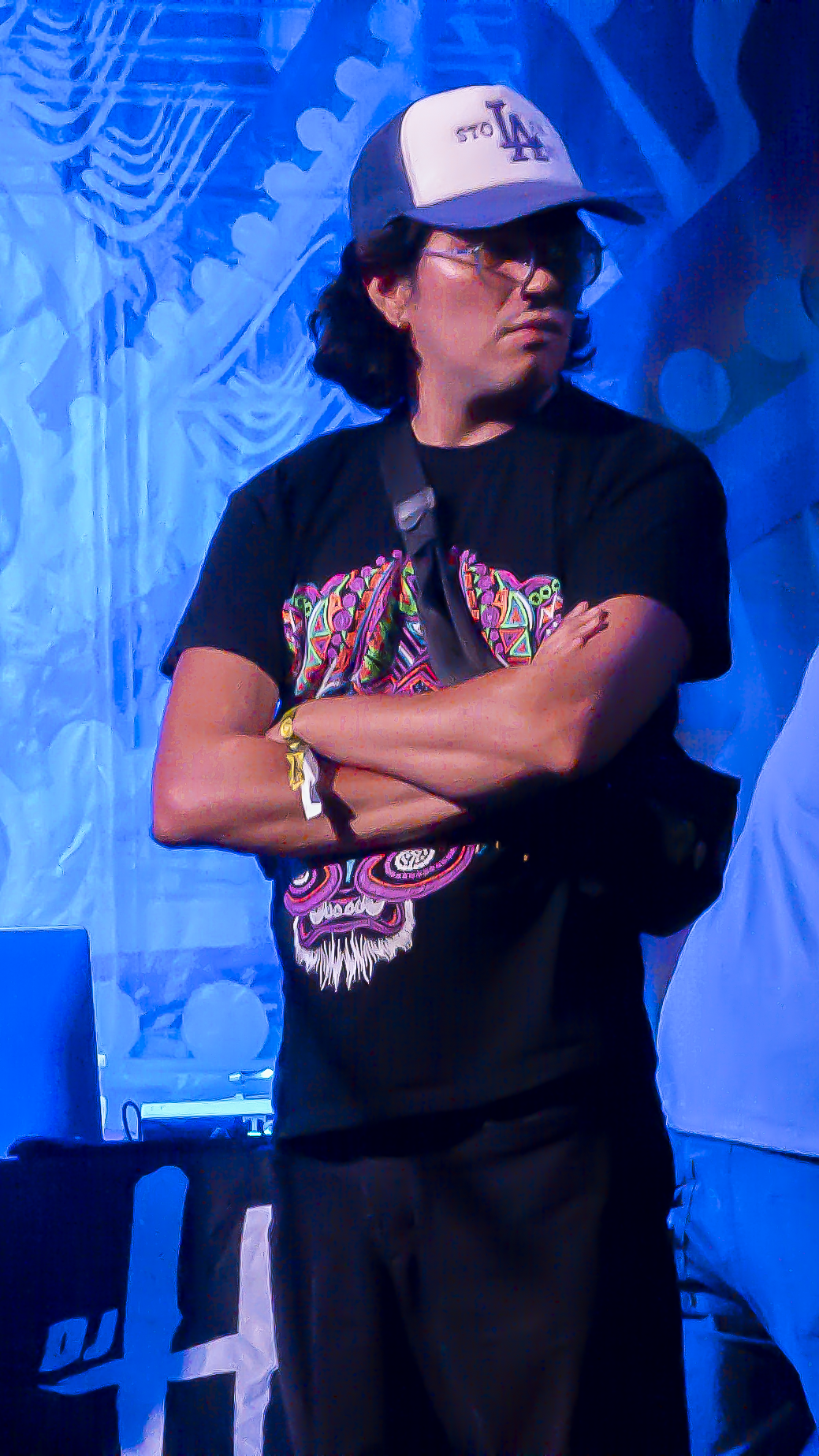
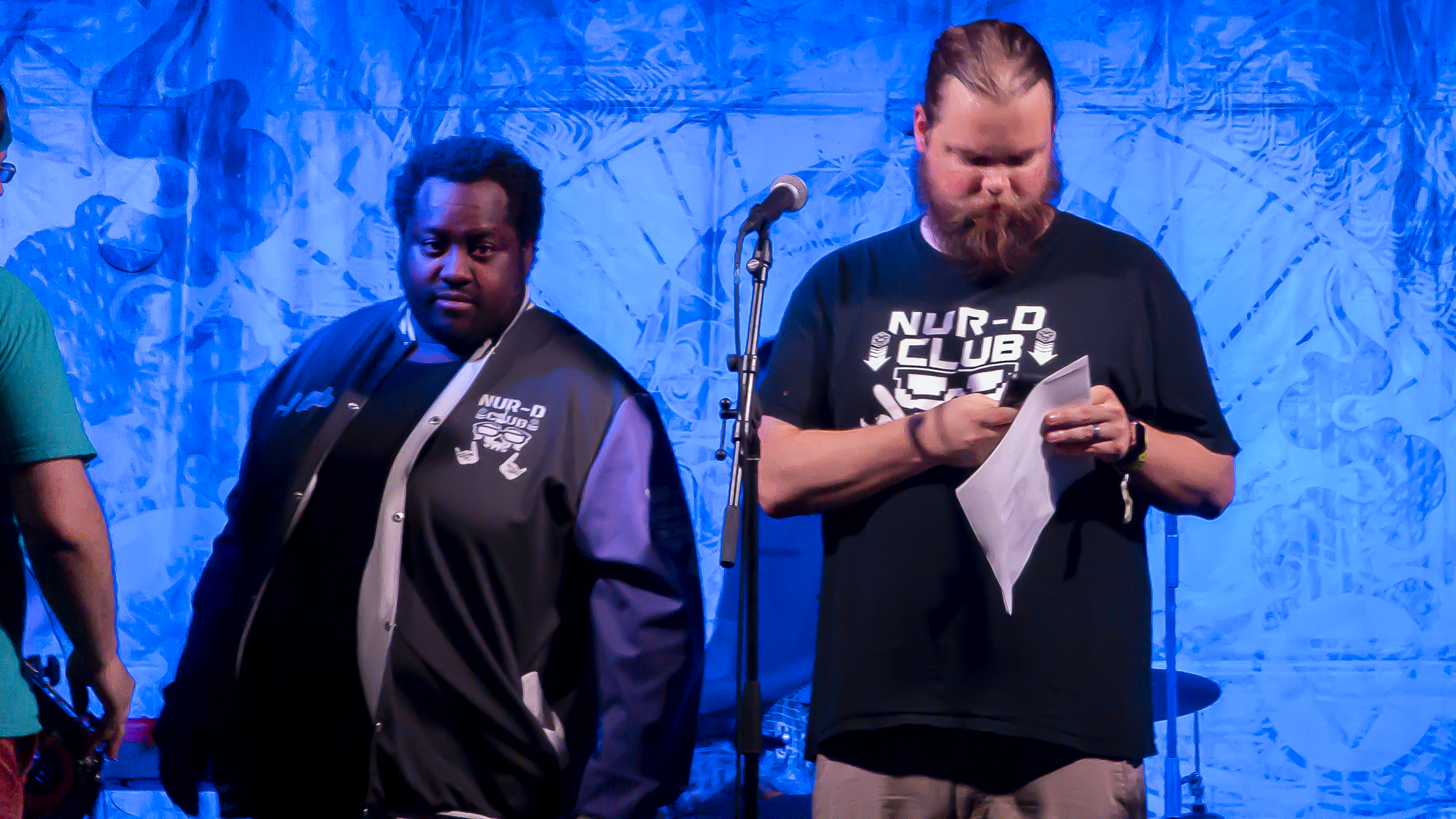
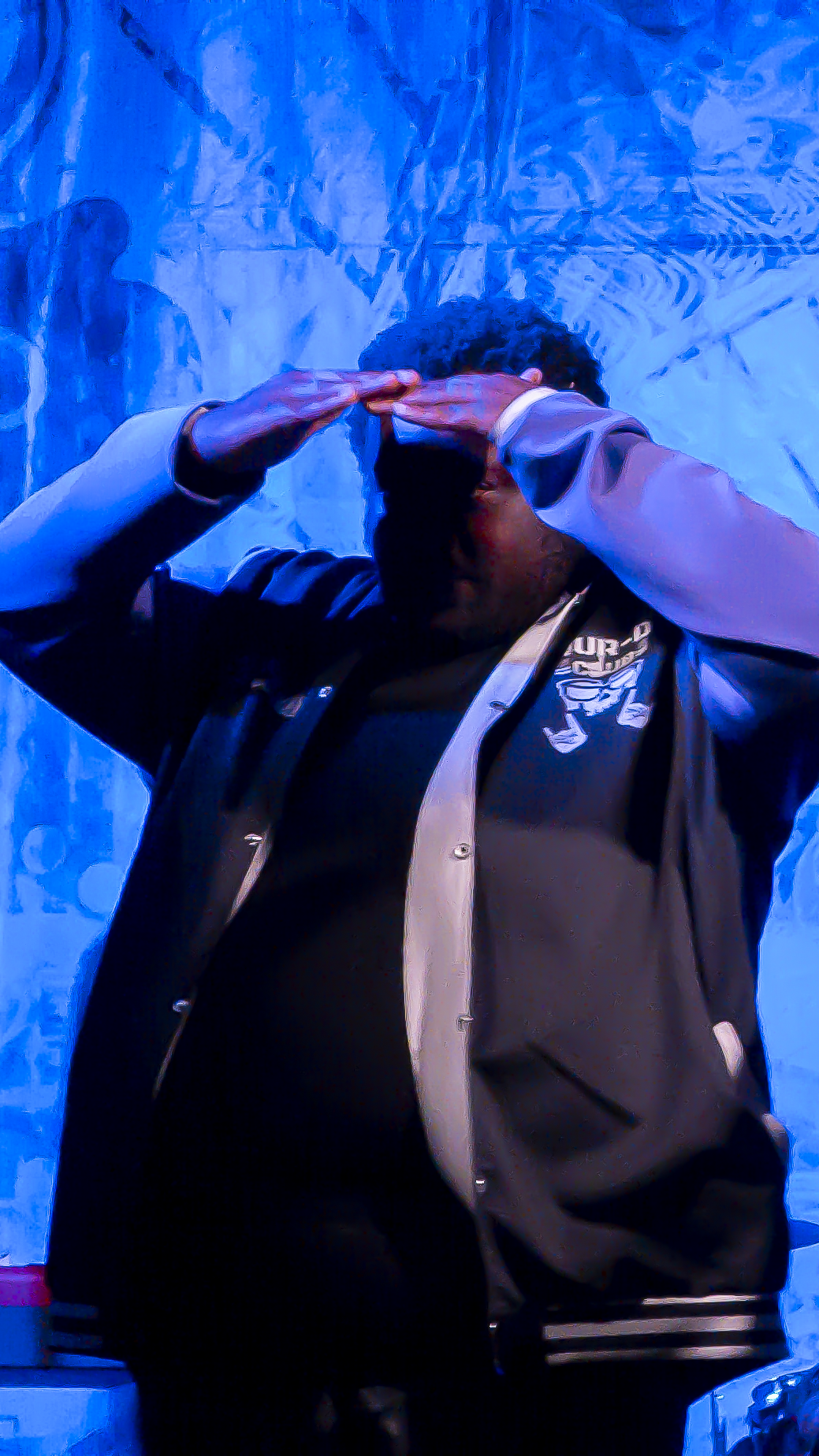
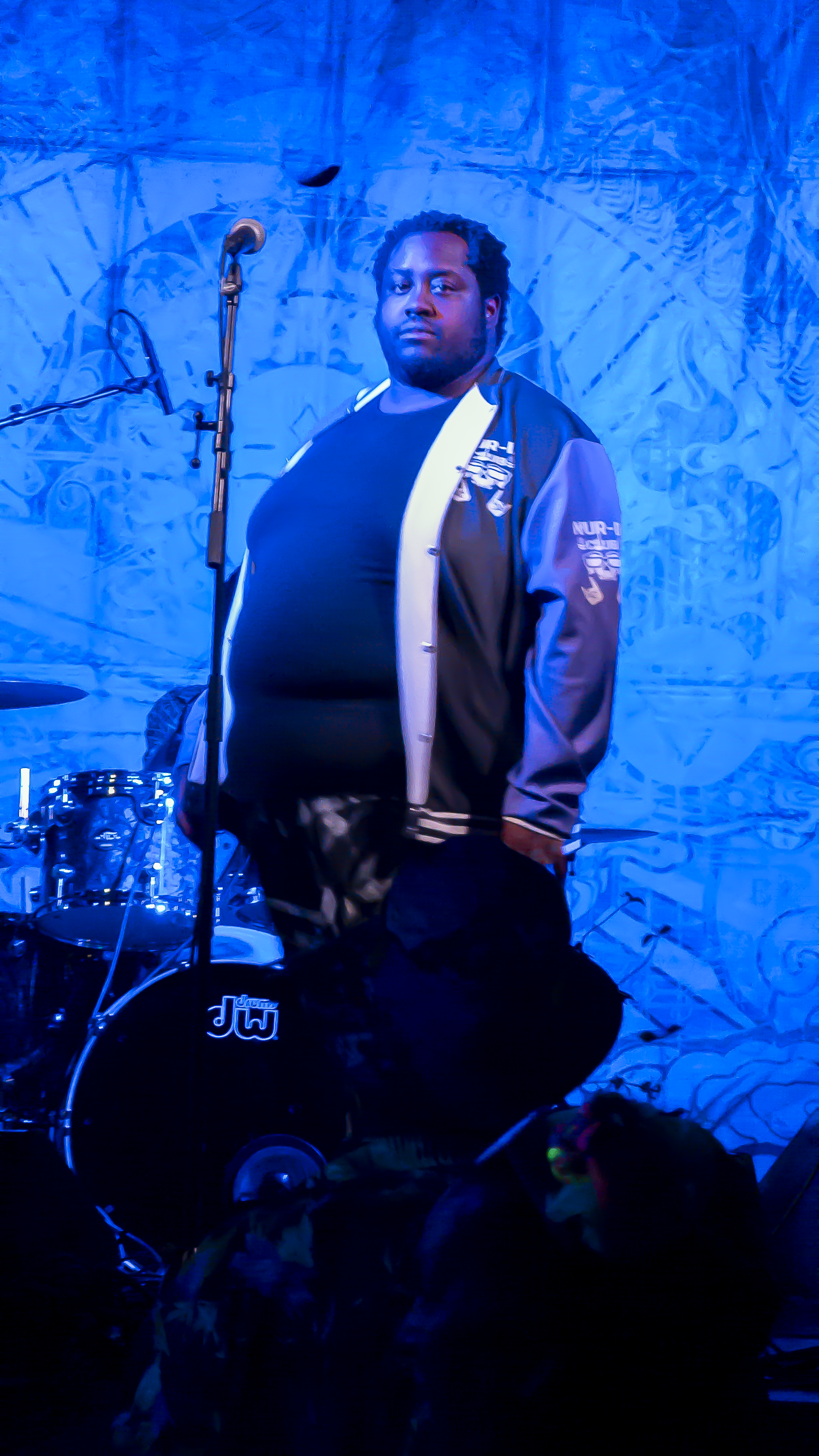
They barely fit.
For Jose and me, the bigger concern was the audience. A large crowd was already gathered in the field, and we needed one stable wide camera position for the Lumix, along with enough room for Jose to move around the stage with the Sony FX2.
Put the Tripod in the Mosh Pit
Once the previous Field Stage performance ended, the crowd migrated toward the larger stage for the next act. That gave me a brief opportunity to move into the field and establish our primary camera position.
I tried to predict where the audience would collect once Nur-D started. It was clear from the prior performance and the active performance that had set up on the main main stage that there would undoubtedly be a massive mosh pit. So, I tried to position myself somewhere that seemed far enough back to capture the full band while staying out of everybody’s way.
My calculations were incorrect.
By the time Nur-D's set was underway, I was standing pretty much directly in the middle of the pit with the Lumix S5IIX mounted on a tripod.
People danced around me, walked in front of the lens, bumped into me all the way through the concert. In the darkness, more than one person discovered the inconspicuously wide spread of the tripod legs.
To everyone’s credit, they were all very kind and incredibly apologetic. I mostly felt bad because I was the one standing in the middle of their concert. It might be a bit of strange philosophy for a camera-man, but generally I try to operate from the perspective that I’m the one in your way, not the other way around. We always make an effort to block crowds as little as possible, though we’ll still find ways to get the shots we need, but ideally we try to do that in the most non-intrusive way possible.
With that said, in spite of all the bumping and rattling, that camera did not move.
I held tight onto the tripod through the entire performance and somehow kept our wide shot steady through all of it. Looking back at the footage afterward, that became one of the things I was proudest of from the entire shoot. Unless somebody physically passed in front of the lens, you would never know how chaotic it was immediately around the camera.
Meanwhile, Jose was moving through the audience with the FX2 collecting the close-ups and dynamic angles we would use to build the final edit.
And this time, we made sure we had the TASCAM running. After the audio lessons we'd learned earlier in the summer, we wanted to make certain we got this done right. I really didn’t want a rough audio situation like what we dealt with at Taste of Minnesota and On the One.
A Proper Concert
The performance was gorgeous.
This was our first Nur-D shoot that really had the classic nighttime concert look: haze, bright beams cutting through the dark, saturated colors, a packed audience and a full band under stage lighting.
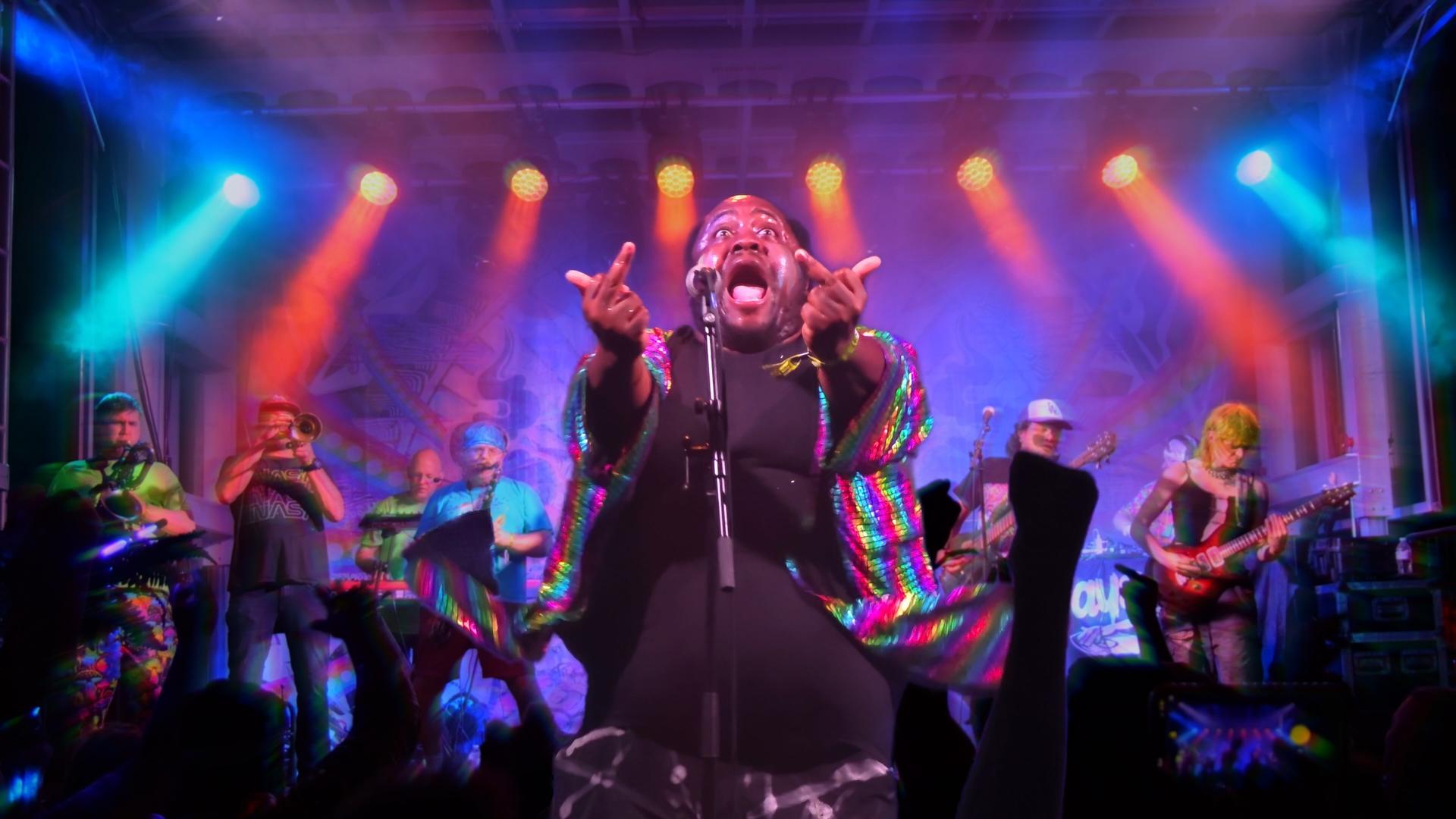
Nur-D had given the band guidance on how to dress for the occasion. The band leaned into bright neon colors, while Nur-D performed in a shimmering rainbow robe that caught every light thrown at it. Between the lighting, bubbles drifting through the field, an enormous inflatable banana somewhere in the audience, and the crowd itself, Shangri-La looked unlike anything we'd filmed with him before.
Somehow, Nur-D made that tiny stage work.
Things got a little weird
Shangri-La also changed how I approached editing the concert.
For the most part, I try to keep concert edits pretty standard. I’ll do color grading and whatnot, but generally I try to keep things as-is. I experimented with more extensive edits for Rival of the Moon at The Hewing, but otherwise I keep things simple.
This time, though, I really couldn’t help myself. I had to play around with all the bright lights and colors. Not only that, but I was able to use the experimentation to solve some practical problems.
Earlier, I mentioned audience members occasionally blocking the camera lens. It wasn’t a major issue throughout the concert, but there were one or two sections where it lasted a little bit longer than I was happy with, and without a solid shot from the Sony to cover it up.
Fortunately, I’d also been filming with my phone for more vertical oriented shots that could be used either as super close-ups from my more static angle, or as parts of vertical edits to the videos for social media.
I did a bit of digging and discovered DaVinci Resolve’s Magic Mask tool. This allowed me to effortlessly isolate Nur-D from the mobile footage, and with that footage placed on top, I used the mirror effect alongside a few other effects on the original Lumix footage to create a beautiful psychedelic kaleidoscope pattern, all while keeping Nur-D clearly visible and at the center (or sides) of the frame.
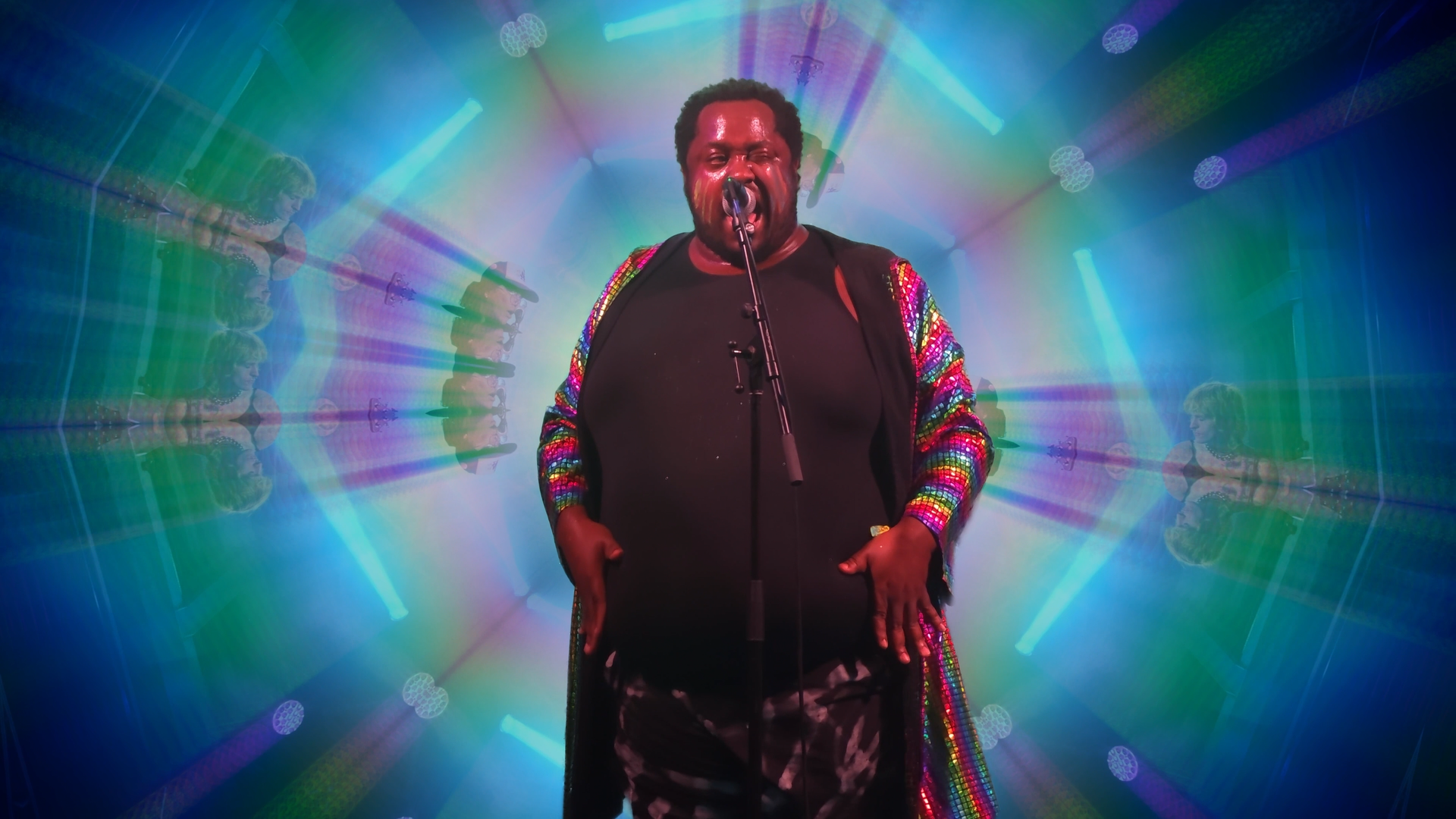
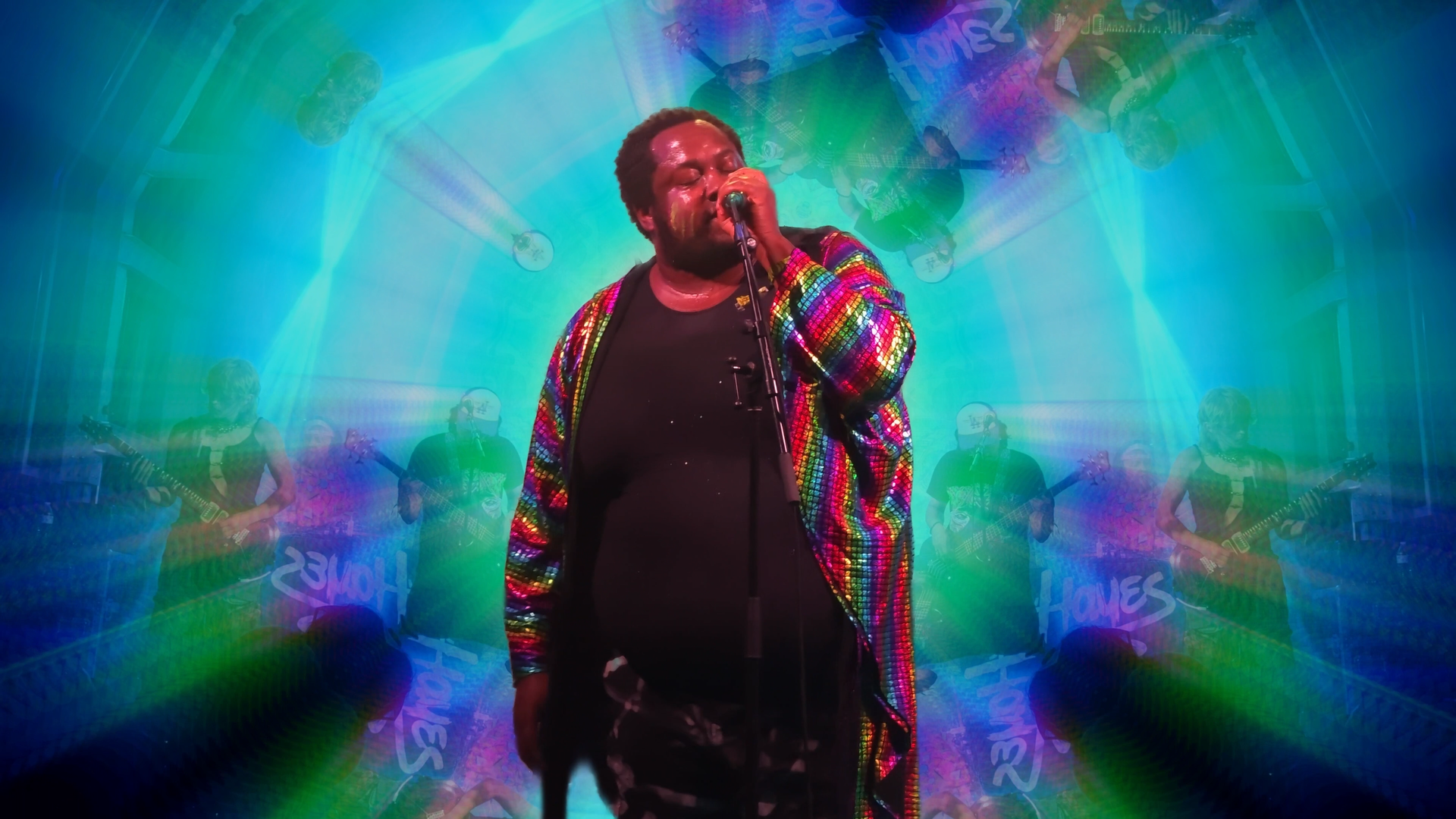
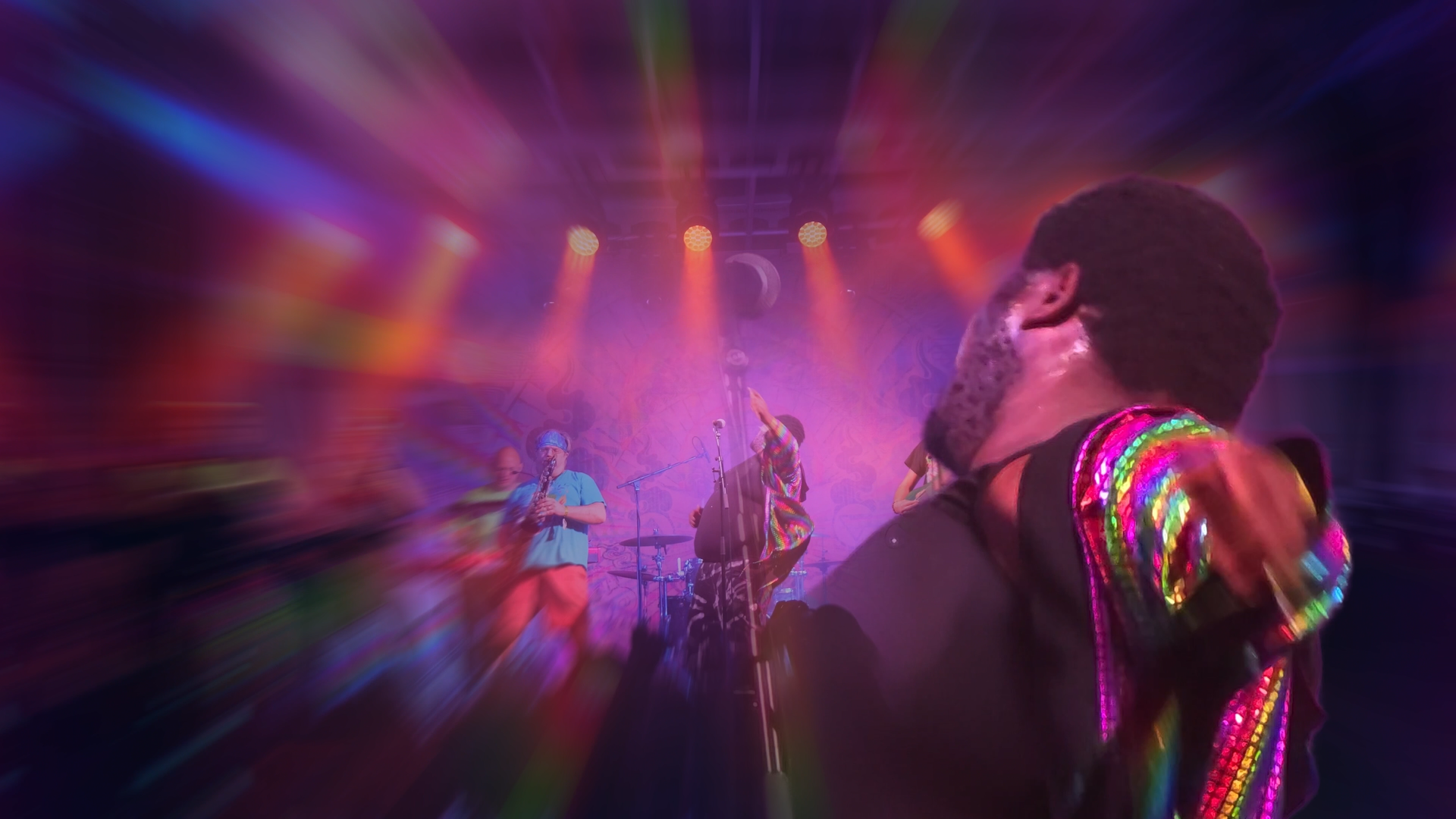
This ended up being a blessing and a curse. As it turned out, this process wasn’t exactly a free meal. As I got deeper into the process, I started running into issues, and eventually I realized that my computer was running out of harddrive space.
As it turned out, the way I was handling the cache data in DaVinci, paired with the generating and regenerating keyframes for this magic mask effect - and the fact that I had never actually cleared my cache since I started working with DaVinci - has essentially caused the program, and the Magic Mask effect specifically to fill up the cache and eat away all my precious hard drive space. Over the next few editing days, the project became a bit of a nightmare as I battled getting the effects I needed while cleaning up as much space as possible. Things got worse when, before doing any research, I did the obvious thing and made the mistake of clearing the cache. I was able to recover the hundreds of gigabytes I’d lost, but because I’d cleared the cache, DaVinci no longer had the information it needed to be able to actually handle those edited files.
So, I’d be going through a video and things would be fine until the playback hit one of those Magic Mask edited areas, and it would kinda break the whole program, run at a slog, and to make matters worse I couldn’t even pre-render or export it. This went on for several more days and a few replacement project files, until I finally caved and rather than try to work around these problem shots, I removed them and rebuilt the Magic Mask layers from the ground up. Redoing them all took quite a bit of time, but it got the job done in the end.
I still use the Magic Mask tool on occasion, but this experience ended up being quite the extensive lesson in the do’s and don’ts of that particular tool…
On a lighter note, one of the other fun and creative edits I did for a shot early before the start of the show. Jose was chilling out with Nur-D waiting for the cue to go on stage, and Nur-D did a bit with his glow wand, waving it around in a parody to the old “You’re Watching Disney Channel” bumpers. So, of course I had to edit in his iconic Pixel Glasses in place of the traditional Mickey Mouse ears.
Third Time’s the Charm
Shangri-La, I think was where the shift started.
At Taste of Minnesota, that had been our first job with Nur-D. We weren’t sure what to expect, or how to be, and I know he wasn’t sure what to expect from us either. Although I was already a pretty big fan at that point, I deliberately went into that new relationship with a lot of arbitrary rules for myself about maintaining professional distance. Keep things formal, don’t overstep, don’t act like a fan. Which was good for a first project, and these were rules I continued to hold to when Nur-D began to inquire about possibly working with us on the Hell Project. He actually asked me if we’d be available for it after we’d delivered the footage (and some posters) from the Taste of MN gig.
So, it was from that point that I decided to hold onto those rules until after Hell.
But then he commissioned me to design the album cover, and hired us to film him at the Hewing, and now he’d brought us to Shangri-La. As much as I continued to hold onto that professional decorum, the more we interacted and built up the relationship between Nur-D and Skull Dogs Media, the more arbitrary and silly those rules I’d made for myself began to feel.
By the time of Shangri-La, those barriers had truly become purposless.
This project at Shangri-La also taught me about the benefits of simply going with the flow. Even when things looked tough or it seemed impossible to film such a small stage in a tight crowd, we really just figured it out. We went with the flow and it led us where we needed to go…
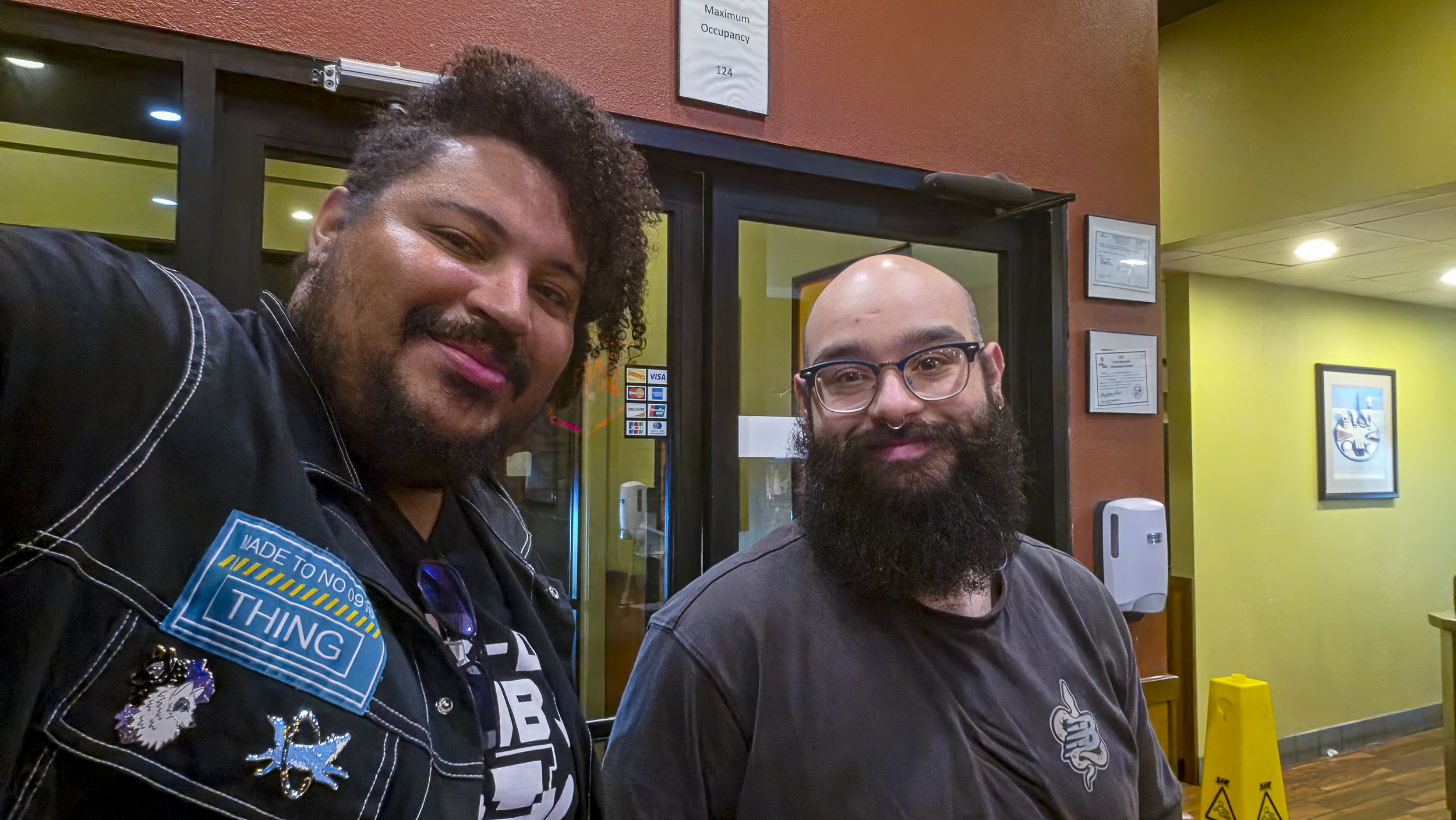
…Which was someplace to eat. By the end of the night, Jose and I were exhausted, hungry, and very aware that we still had a long drive back to the Twin Cities.
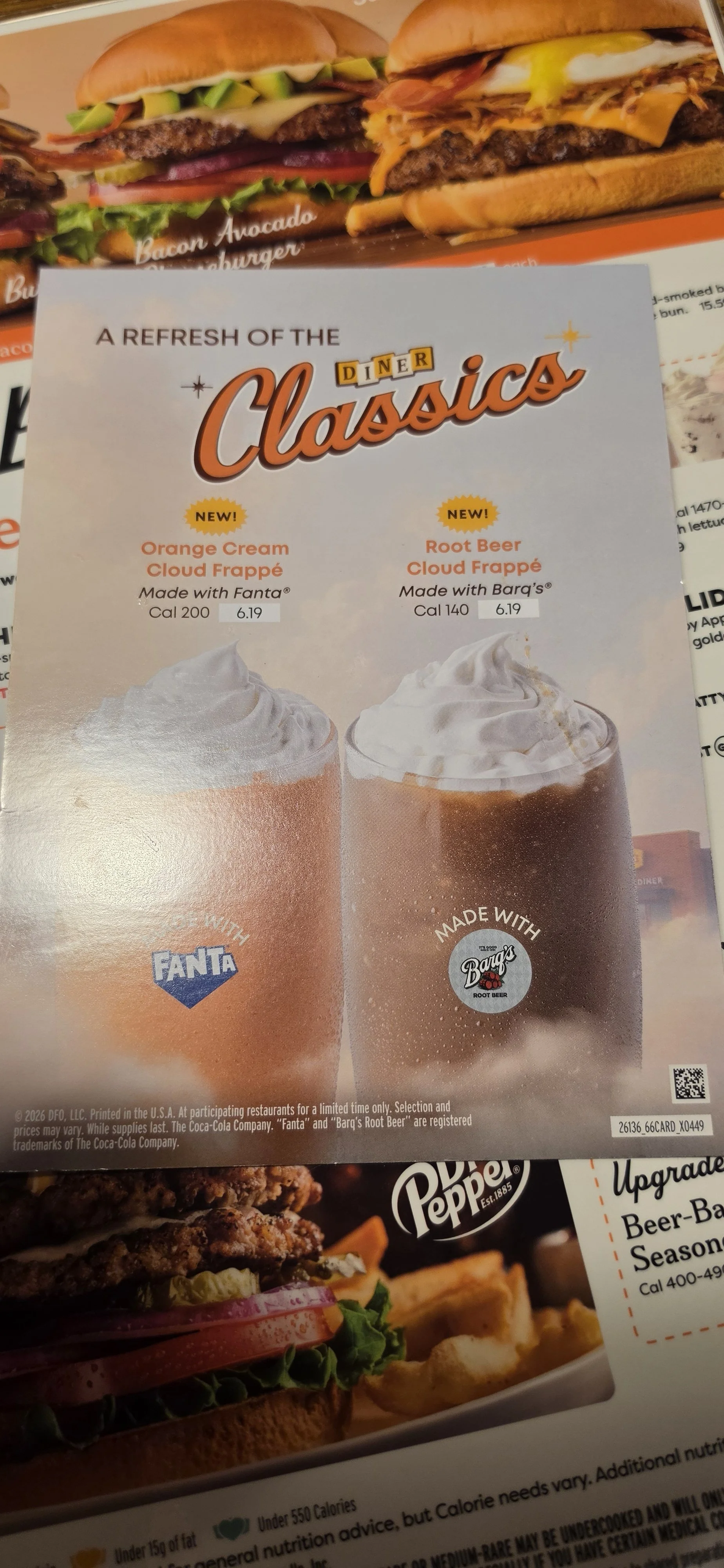
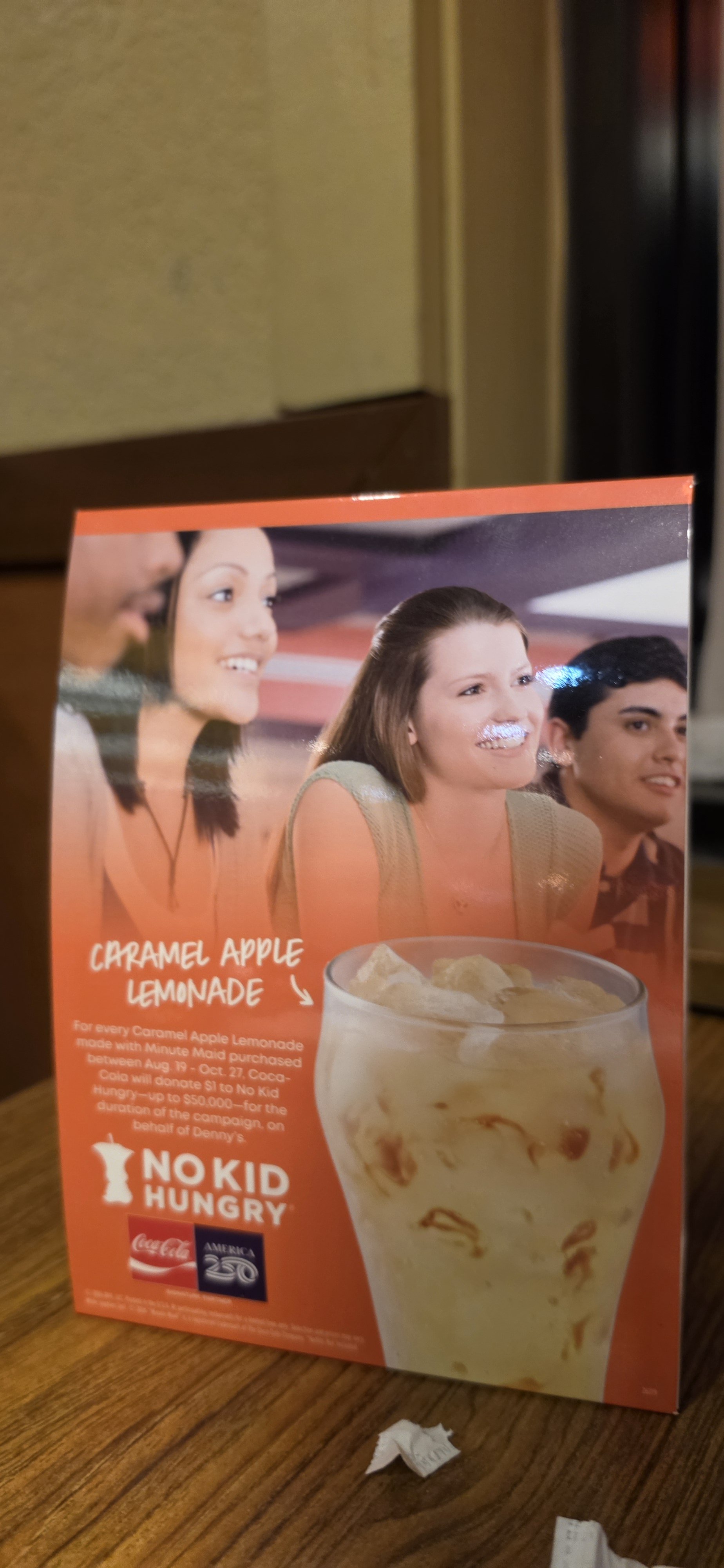
Our final stop was a Denny's in the suburbs sometime around Midnight, but even I wasn’t sleepy enough to risk trying a Root Beer Cloud Frappé or a Caramel Apple Lemonade…
After Shangri-La, we'd had enough adventure for one day.